
How to be Like G-d?
The Jewish holiday of Lag Ba’Omer is perhaps the most popular day for weddings…but, can we find a hint to this in the Torah? Rabbi Aaron Pessing shares some sources and a gematria which allude to weddings on Lag BaOmer.
Read more
The Jewish holiday of Lag Ba’Omer is perhaps the most popular day for weddings…but, can we find a hint to this in the Torah? Rabbi Aaron Pessing shares some sources and a gematria which allude to weddings on Lag BaOmer.
Read more
The Jewish holiday of Lag Ba’Omer is perhaps the most popular day for weddings…but, can we find a hint to this in the Torah? Rabbi Aaron Pessing shares some sources and a gematria which allude to weddings on Lag BaOmer.
Read more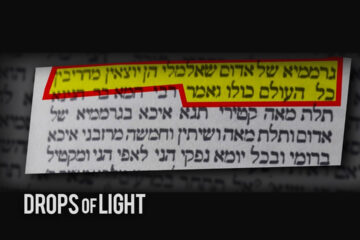
In the Talmud (Gemara) Tractate Megillah, bottom of Page 6a to 6b – from 2000 years ago – it’s written that Yakov, the father of the Jewish people prays to G-d and pleads to save him from Esau’s hands and that He not allow Esau to carry out his plot. There the gemara asks: What plot? To which it’s explains -“Zu Germamia of Edom”…
Read more
Did you know what happened on the 33rd Day of the Omer counting? A Jewish Holiday known as Lag B’Omer. The most well known event that occurred on this day was the death of Rabbi Shimon Bar Yochai, a Tannaitic sage who is also known to be the author of the kabbalistic book of the Zohar. However, Rabbi Aaron Pessin shares several other fascinating connections to this special day.
Read more
Millions upon millions, perhaps even billions across the world share the same practice. First thing in the morning, they go prepare their cup of coffee, or they buy one. But seemingly this is a very strange phenomenon. If you think about it… Rabbi Pessin explains
Read more
On Jewish festive days we say the Hallel prayer. In it we read a verse which says “Moshivi akaret habayit, eIm habanim smeicha” ” G-d takes a barren wife and makes her into a happy mother” – The Radak, a medieval rabbi, biblical commentator, philosopher, and grammarian (Rabbi David Kimhi) points out that aside from this verse teaching us of G-d’s full control over the world, it also hints to redemption. Rabbi Aaron Pessin shares this fascinating message.
Read more
Why is Purim called Purim? We know that it’s explained in the scroll of Esther (Megilat Esther) that it’s called Purim because of the Pur / the lottery that Haman did. Pur is lottery in Hebrew. However Rabbi Rabbi Avigdor Nebenzahl explains a different reason, in a lighthearted/Purim fashion – Rabbi Aaron Pessin shares the essence of this special Jewish holiday.
Read more
There’s a widely accepted custom when we go to the Synagogue and listen to the reading of Megillat Esther, we bang and make noise when we hear Haman’s name being read. What is the source to this tradition? Rabbi Aaron Pessin shares…
Read more
In the Torah portion of Terumah we read about the construction of the various utensils used for the miishkan / tabernacle / sanctuary in the desert. Like every Synagogue through out history was built by donations, so was the sanctuary in the desert. When collecting money for the sanctuary, the Torah uses the expression “kol nediv leebo” “all those generous of heart” – however this is the only time in this expression is used by donations in the Torah. The question is WHY?
Read more
The Jewish people sing a song of Thanksgiving to G-d as they cross the red sea on dry land. In this song it says “This is my G-d & I will glorify Him” – We learn from this verse that when performing G-d’s commandments we should go above and beyond the bare minimum requirement – we should beautify the mitzvah/commandment, The question is asked: Why specifically is it this verse, of the Jews by the sea, that teaches us this lesson? There are many miraculous events that happened for the Jewish people – what is special about this one? Rabb Ari Enkin shares the lesson…
Read more